Case Study 1: The Niger Delta (Nigeria)
Case Study 1: The Niger Delta (Nigeria)
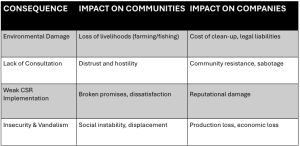
The Niger Delta provides one of the clearest examples of poor stakeholder management and its long-term consequences. Over 90% of Nigeria’s oil production comes from this region, yet it has long struggled with environmental degradation, socio-economic disruption, and strained relations between oil companies, government, and host communities. For decades, oil spills and gas flaring caused extensive environmental damage, devastating farmlands and fishing waters and eroding the livelihoods of communities that depended heavily on farming and fishing. This breakdown in engagement created widespread socio-economic devastation that further deepened distrust between stakeholders.
The situation also reflects the cost of weak engagement strategies. Oil operators experienced project delays, cost overruns, and reputational damage, while unfulfilled promises only worsened community resentment. At the national level, Nigeria faced insecurity, crude theft, and widespread pipeline vandalisation, leading to severe economic losses. The Niger Delta experience demonstrates how neglecting stakeholder concerns can create a cycle of distrust, conflict, and operational disruption, producing consequences that affect both communities and corporations for decades.
Key Issues Identified
- Environmental degradation.
- Inadequate compensation for pollution.
- Poor access to justice.
- Insufficient consultation with communities.
- Unfulfilled Corporate Social Responsibility (CSR) promises.
Table 2: Consequences of Poor Stakeholder Management in the Niger Delta
Improvement Measures in Stakeholder Engagement
In response to these challenges, several measures could be introduced:
- Multi-Stakeholder Dialogues: Engaging host communities and leaders to find acceptable solutions.
- Partnerships with NGOs and Civil Society: Addressing environmental damage and promoting alternative livelihoods.
- GMOUs/Community Development Agreements (CDAs)/Host Communities Trust Fund: Ensuring oil revenues benefit infrastructure, education, and healthcare.
- Improved Environmental Monitoring: Implementing systems to reduce spills and flaring.
Table 3: Measures for Improving Stakeholder Engagement
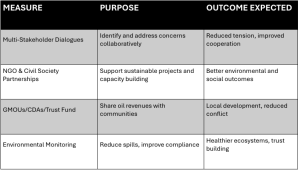
This table highlights practical solutions companies are adopting to rebuild trust and create shared value in host regions.
Engagement Tools in Oil and Gas
Different methods are used to engage stakeholders effectively.
- Public or Town Hall Meetings.
- Focus Groups.
- Consultations.
- Email Campaigns.
- Newspaper Adverts.
- Community Groups (e.g., women or youth groups).
- In-person Visits.
Table 4: Stakeholder Engagement Tools in Oil and Gas
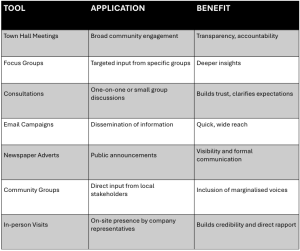
This table shows how multiple communication methods allow companies to engage both broadly and deeply, ensuring inclusion of all key voices.
Conclusion
Stakeholder engagement in the oil and gas sector is complex but essential. The Niger Delta experience shows how poor management leads to conflict, reputational damage, and economic loss, while inclusive and transparent engagement fosters sustainable outcomes. As the industry transitions globally and international oil companies divest, stakeholder engagement becomes even more critical. Building trust, promoting dialogue, and ensuring shared benefits are central to creating resilient businesses and stable communities.