
Case Study 2: The Three Gorges Dam (China)
Case Study 2: The Three Gorges Dam (China)
The Three Gorges Dam is one of the most ambitious infrastructure projects in modern history, located on the Yangtze River in China. While it was celebrated as a symbol of engineering advancement and a major source of renewable energy, the project has also been criticised for its social and environmental consequences. Over 1.3 million people were displaced during its construction, entire towns were submerged, and countless cultural heritage sites were lost. For many communities, compensation was either inadequate or poorly managed, leading to long-term resentment and social disruption.
The project highlights the complexities of balancing national development goals with the needs of local communities and the environment. While it contributed significantly to China’s power supply and flood control, it also triggered ecological degradation, reduced biodiversity, and altered local livelihoods dependent on farming and fishing. Like the Niger Delta, the Three Gorges Dam illustrates how insufficient stakeholder engagement and neglect of community concerns can undermine the sustainability of large-scale projects, creating consequences that persist long after completion.
Key Issues Identified
- Large-scale displacement of communities.
- Inadequate compensation and resettlement support.
- Submergence of cultural and historical heritage sites.
- Environmental degradation, including reduced biodiversity.
- Limited consultation with affected populations.
Table 1: Consequences of Poor Stakeholder Management in the Three Gorges Dam Project
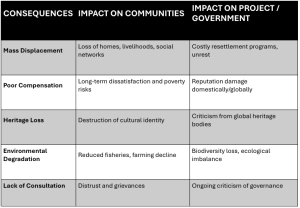
This table shows how inadequate stakeholder engagement resulted in severe social, environmental, and reputational costs, despite the project’s economic benefits.
Improvement Measures in Stakeholder Engagement
- Early and inclusive community consultation before resettlement.
- Transparent and fair compensation frameworks.
- Collaboration with UNESCO and heritage bodies to protect cultural sites.
- Stronger environmental monitoring systems.
- Partnerships with NGOs for sustainable livelihood programs in resettled areas.
Table 2: Measures for Improving Stakeholder Engagement in the Three Gorges Dam Project
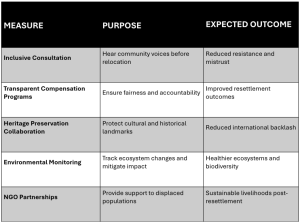
Engagement Tools in Infrastructure Projects
- Community Resettlement Dialogues.
- Public Hearings and Consultations.
- Partnerships with local and international NGOs.
- Environmental and Social Impact Assessments (ESIAs).
- Compensation Committees with community representation.
- Transparent Reporting via government and media platforms.
The Three Gorges Dam demonstrates the risks of prioritising national development goals over robust stakeholder engagement. While it brought significant benefits in power generation and flood control, the lack of early, inclusive, and transparent engagement created lasting social, cultural, and environmental consequences. For countries like Nigeria, the lesson is clear: large-scale projects require not only technical planning but also genuine dialogue, fair compensation, and long-term monitoring to balance development with human and ecological well-being.