Key Principles of Effective Negotiations
Key Principles of Effective Negotiations
Principles guide negotiators in maintaining focus and professionalism. Each ensures that outcomes are fair, practical, and sustainable.
- Preparation is absolutely essential (brainstorming).
- Establish trust and rapport with counterparts.
- Focus on interests, not positions.
- Compromise is inevitable (make concessions).
- Persistence, adaptability, and open-mindedness are key.
- Set realistic expectations and targets (patience).
Successful Negotiation Strategies
Strategies provide a roadmap for reaching constructive agreements.
1. Preparation and Planning (Homework!)
Before negotiations, stakeholders’ interests and concerns must be identified. Performing stakeholder analysis helps assess their power, influence, and expectations. Clear goals and priorities should be set, along with alternatives such as BATNA (Best Alternative to a Negotiated Agreement).
2. Practice Active Listening
Open dialogue is encouraged through careful listening. Asking clarifying questions aids understanding and builds collaboration. Respecting other parties’ views strengthens mutual trust.
3. Use Objective Criteria
Disputes should not devolve into personal battles. Instead, objective standards like professional benchmarks, technical standards, or globally recognised measures should guide agreements. Bribes or threats must be avoided.
4. Separate People from the Problem
It is important to avoid personal attacks or disrespectful behaviour. Negotiators should focus on substantive issues and manage emotions effectively to ensure communication remains professional.
5. Collaborative Negotiation (Win-Win Mindset)
This strategy ensures outcomes are mutually beneficial rather than one-sided. It explores creative options that create value for all parties and builds long-term relationships.
6. Clear Communication and Agreement Documentation
Summarising agreements in clear, concise terms reduces misunderstandings. Written documentation ensures accountability and stakeholder trust.
7. Implementation and Follow-up
An action plan is required to implement agreements. This should specify roles, responsibilities, and timelines. Regular monitoring and post-agreement discussions help resolve new issues and maintain positive relationships.
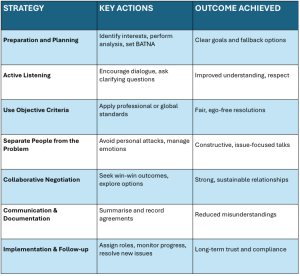
Table 2: Negotiation Strategies
This table below consolidates the seven strategies, showing how each phase contributes to both short-term success and long-term relationships.